.png)
Information & facts
Shiner Perch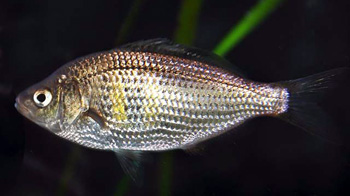
Cymatogaster aggregata
Description: The body of the shiner perch is an oval shape and is compressed from side to side. These perch have dusky greenish back and silvery sides that have a pattern combining horizontal bars with three broad yellow vertical bars. Breeding males turn almost entirely black, obscuring the barred pattern with dark speckles. Shiner perch are distinguished by having 8-9 dorsal fin spines, and 18 to 23 dorsal rays. The anal fin has 3 spines followed by 22–25 rays.
Maximum Size: To 20.3 cm (8 in) in length.
Maximum Age: 9 years old.
Range/Habitat: Shiner perch range from Wrangell, southeastern Alaska to Bahia San Quintin, northern Baja California, Mexico. They are usually found in shallow water around eelgrass beds, piers and pilings and are commonly found in bays and calm areas of exposed coast.
Bait and Tackle: For most anglers, the problem with these fish is how to keep them off your hook, not how to get them on. If you are using small hooks (under a size 4) and small bait, especially pieces of worm, and if shiners are around, you will probably catch them. However, some may actually want to catch them—they are great fun for kids. They also make good live bait for larger species like striped bass and halibut. To catch them, simply use small hooks (size 8), a small piece of bait, and fish from the top to the mid-depth level of the water.
Food Value: Too small—throw ‘em back since they attract the larger game fish to the pier. Actually some ethnic groups do eat them; they’re often pickled and some people like to dry them and use them in Oriental dishes.
Comments: Shiners can be a problem when you are using expensive pile worms or bloodworms and fishing for the larger perch